
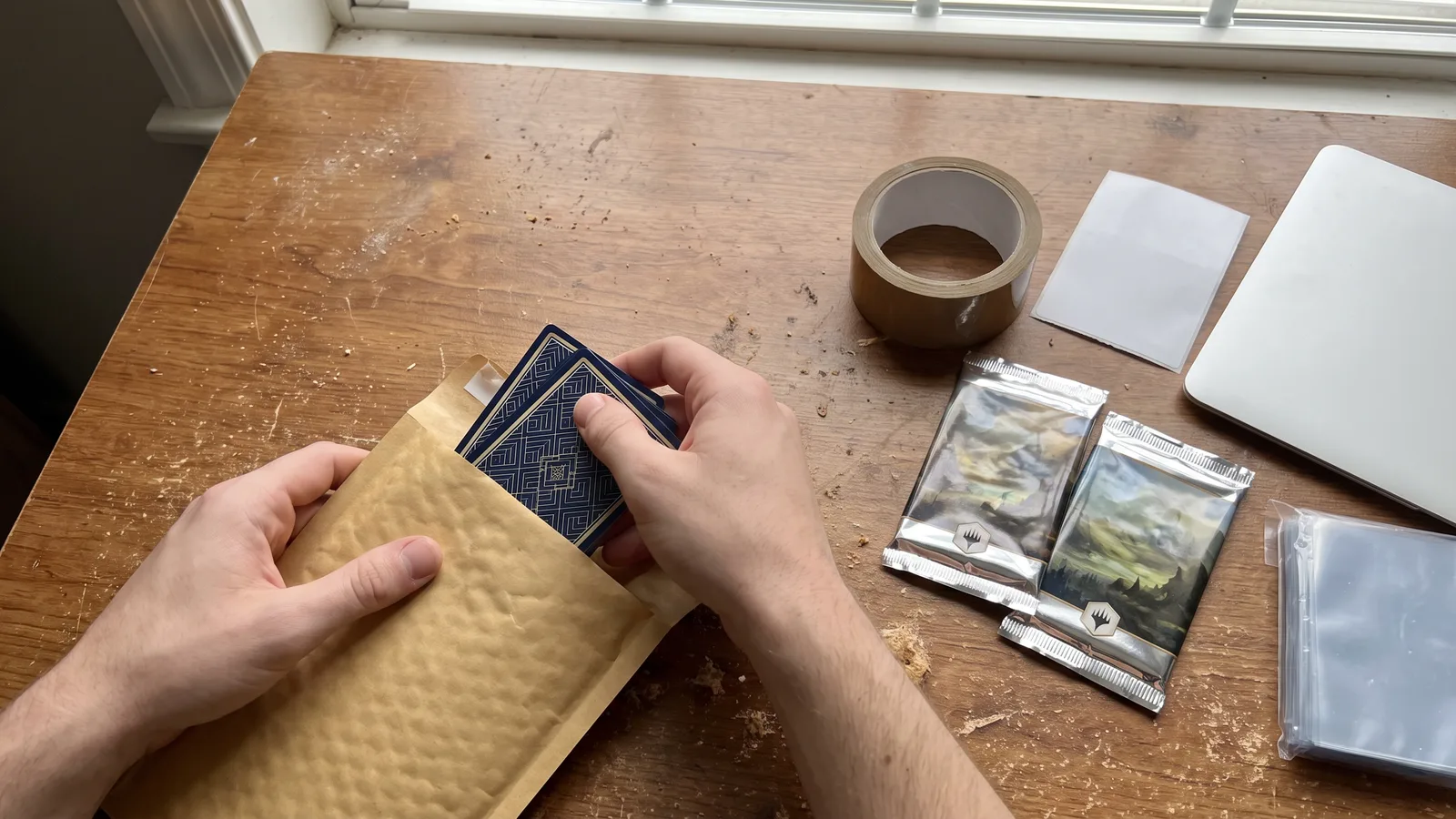

Short answer: Selling proxies of real Magic: The Gathering cards on Etsy is not allowed, even if you remove the logo. Etsy bans unauthorized copies of protected designs, and Wizards of the Coast’s Fan Content Policy says you can’t sell Wizards-related content or make proxy cards as fan content.
What you can sell: cards, tokens, accessories and whole games built on your own art, names and rules.
Search Etsy for “MTG proxy” and you’ll find hundreds of listings, some from shops with thousands of sales. So it’s fair to ask: if it’s banned, why is it everywhere?
We read the actual policy pages so you don’t have to. Below is what Etsy says, what Wizards says, why so many shops stay up for a while, and the product ideas that let you sell to Magic players without building your shop on a listing that can disappear overnight.
This is a plain-English summary, not legal advice. If your income depends on it, talk to an IP lawyer in your country.
What Etsy’s rules actually say
Two Etsy policies matter here.
1. The Unauthorized or Counterfeit Goods Policy. It says “unauthorized replicas or copies of items, and patterns or designs enabling their creation, are prohibited on Etsy.” Etsy defines these as items that imitate an authentic good, “particularly by using a brand’s name, logo, or protected design without the brand owner’s consent” (Etsy).
Look at the wording. Logo is only one of three things listed. A card’s name, its rules text, its art and its layout can all be protected even with no logo on it.
2. The Intellectual Property Policy. This is how listings actually get removed. Etsy says it can’t decide whether something infringes. It removes listings when a rights owner sends a report that follows its process. Shops with repeat notices can lose selling privileges, and Etsy may refuse service to new shops it believes belong to the same person (Etsy IP policy).
In practice, Etsy usually waits for the rights owner to complain. That explains a lot about what you see in search.
What Wizards of the Coast says
Wizards’ Fan Content Policy is the document most sellers never read. Three parts matter:
- Fan content must be free. You can’t sell it or license it for any kind of payment.
- Proxies aren’t fan content at all. The policy says fan content doesn’t include verbatim copying of Wizards’ IP and names “creating counterfeit/proxy Magic: The Gathering cards” as an example, whether you give them away or not.
- The FAQ is blunt about selling. Asked whether fan content can be sold online or at conventions, Wizards answers: “No… we don’t allow anyone to sell Wizards-related content without our permission.”
Wizards does draw a line for personal use. In its 2016 statement on proxies, it said it has no desire to police playtest cards made for personal, non-commercial use (Wizards of the Coast). Printing a playtest copy of a card you own for your kitchen-table game is one thing. Selling a deck of copies to strangers is a different thing, and Wizards has said so. ICv2 reported that Wizards treats selling proxies, even ones with original art, as commercial use it doesn’t condone.
“But the shop next door has 2,000 sales”
We hear this a lot. Here’s why it doesn’t mean much:
- Enforcement waits for a report. Etsy removes listings once a rights owner files a valid report. Until someone does, a listing can sit there.
- Takedowns come in waves. A shop can run for months and then get several notices in one week. Because of the repeat-infringer rule, that can end the whole shop, not just one listing.
- Wizards does send letters. AetherHub reported that MTG Print, a proxy site run by CardTrader, went offline for three days after a cease-and-desist and came back without its option to buy premade proxies. The same article says Card Conjurer’s letter cited copied card text and art and the use of Magic trademarks, and the site removed official artwork and mana symbols (AetherHub). Card Conjurer’s own about page confirms the takedown happened in November 2022 (Card Conjurer).
Seeing a listing in search tells you nobody has reported it yet. It doesn’t tell you it’s allowed.
The “no logo” myth
The most common argument we see goes like this: “My proxies don’t have the MTG logo or the Wizards copyright line, so they’re not counterfeit.”
That misses most of what’s protected. A typical proxy still copies:
- the card name and rules text, written by Wizards
- the art, usually licensed from a named artist
- the frame, mana symbols and set symbols that make it look like a real card
Removing the logo doesn’t change any of those. “Full-art” or “alt-art” proxies don’t fully escape it either. If the card is still recognisably a specific Magic card, it’s still a copy of that card. And listings that use “MTG” or “Magic” in titles and tags to get found are using the trademark to sell.
What you can sell to Magic players instead
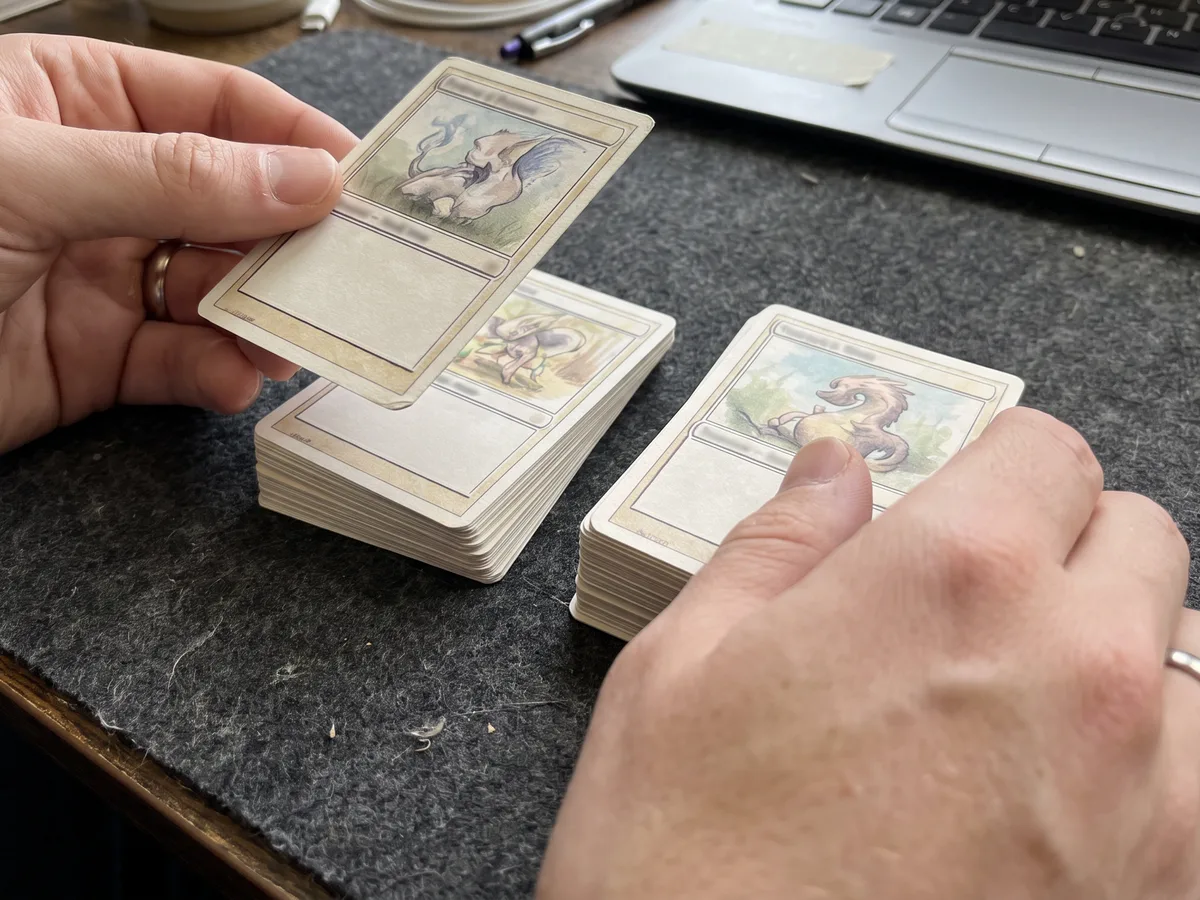
The good news is that Magic players buy plenty that isn’t a proxy. These five product types work well because the art and design are yours:
| Product | Why it works | Watch out for |
|---|---|---|
| Your own card game or expansion-style set | You own the art, names and rules, so you can sell it anywhere and run reprints or new packs. | Don’t copy frames, mana-style symbols or card backs that look like Magic. |
| Original-art tokens and counters | Tokens are useful for any game, and players buy them in sets. | Don’t use official card names or creature types copied from real tokens. |
| Playmats, deck boxes and dividers | Players need them, and your art is the selling point. | Describe fit (“fits standard 63 × 88 mm cards”) instead of leaning on trademarks. |
| Custom cards for clients who own their IP | Weddings, brands, streamers and indie studios want cards with their own art. | Ask for written proof they own or licensed the artwork. |
| Booster-pack style drops of your own cards | Random packs and rarities give fans a reason to come back. | Check local rules on randomized products in your market. |
How to list original cards on Etsy the right way
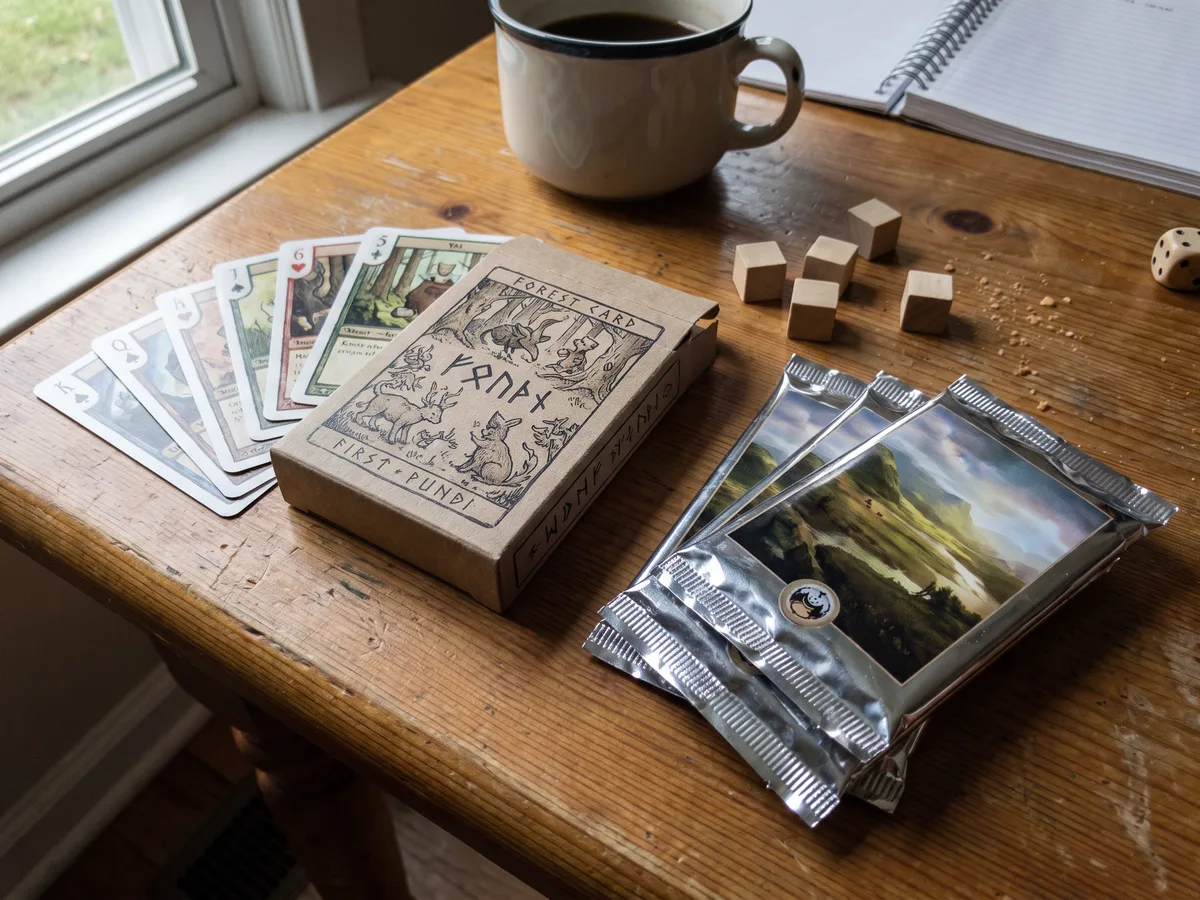
If you switch to original products, a few details keep your listings clean:
- Disclose your production partner. Etsy’s Creativity Standards allow items you design that a production partner makes, as long as you’re open about it in the listing.
- Use descriptive tags. “Fantasy trading card game”, “original card art” and “custom booster pack” describe your item without borrowing a brand.
- Keep proof of ownership. Keep source files, sketches and any commission agreements in case a listing is ever reported. You’ll need them to respond.
- Sample before you list. Order one physical copy and photograph it yourself. Real photos beat mockups for both trust and conversions.
If you want to sell your own cards: a few print options
Once your cards are original, the question becomes how to make and ship them without filling your spare room with boxes. Five options worth comparing:
| Option | What it’s good at | Minimum | Booster packs | Orders from your own store |
|---|---|---|---|---|
| Printify | Standard 52-card playing card decks, ordered one at a time or in bulk. | No minimum | Not listed | Yes: Etsy, Shopify, eBay, WooCommerce, Amazon |
| QPMN | Trading card game decks (18–612 cards), fixed or randomized booster packs, tuck boxes and foil, with one-deck samples. | 1 deck (sample) | Fixed and randomized | Yes: Shopify, Etsy, Squarespace, WooCommerce, API |
| MakePlayingCards | A wide choice of card stocks (13 listed), from one deck to tens of thousands. | 1 deck | Not listed | Not listed |
| The Game Crafter | Board and card games, with bulk discounts from 10 copies and its own marketplace for indie games. | No minimum | Not listed | Not listed |
| Shuffled Ink | US-made playing cards, card games and tarot, printed in Florida. | 15 sets | Not listed | Not listed |
For a single playing card deck on Etsy, Printify is the quickest start. MakePlayingCards lists 13 card stocks if feel matters most, and The Game Crafter adds a marketplace for indie games. If your plan includes booster packs or orders from your own store, QPMN lists both. Whichever you pick, print only designs you hold the rights to, which keeps you in the “lower risk” column above.
Our take
We get why proxies are tempting. Demand is real, card prices are high, and the listings seem to sell. But a proxy shop is rented on somebody else’s IP, and the owner can end it with a few reports. If you have design skills, the long game is your own cards. They’re harder to start, but nobody can take them down because you aren’t the one who drew them.
Next in this series: MTG card maker tools compared (6 November) and MTG proxy generators and print tools compared (9 November).
FAQ
Is it legal to sell MTG proxies on Etsy?
Etsy prohibits unauthorized copies of protected designs, and Wizards of the Coast says it doesn’t allow anyone to sell Wizards-related content without permission. Selling proxies of real Magic cards breaks both policies, so listings can be removed and shops can be closed.
Are proxies okay if I remove the Magic logo?
No. Card names, rules text, artwork, frames and symbols can all be protected. Removing the logo doesn’t make a copy of a real card your own design.
Can I print proxies for my own games?
Wizards has said it doesn’t want to police playtest cards made for personal, non-commercial use. Proxies aren’t allowed in sanctioned tournaments, and you shouldn’t sell or trade them.
What happens if my Etsy listing gets an IP report?
Etsy removes the reported listing and contacts you. Repeat or multiple notices can lead to losing your selling privileges, and Etsy may refuse service to new shops it links to you.
What can I sell to Magic players on Etsy instead?
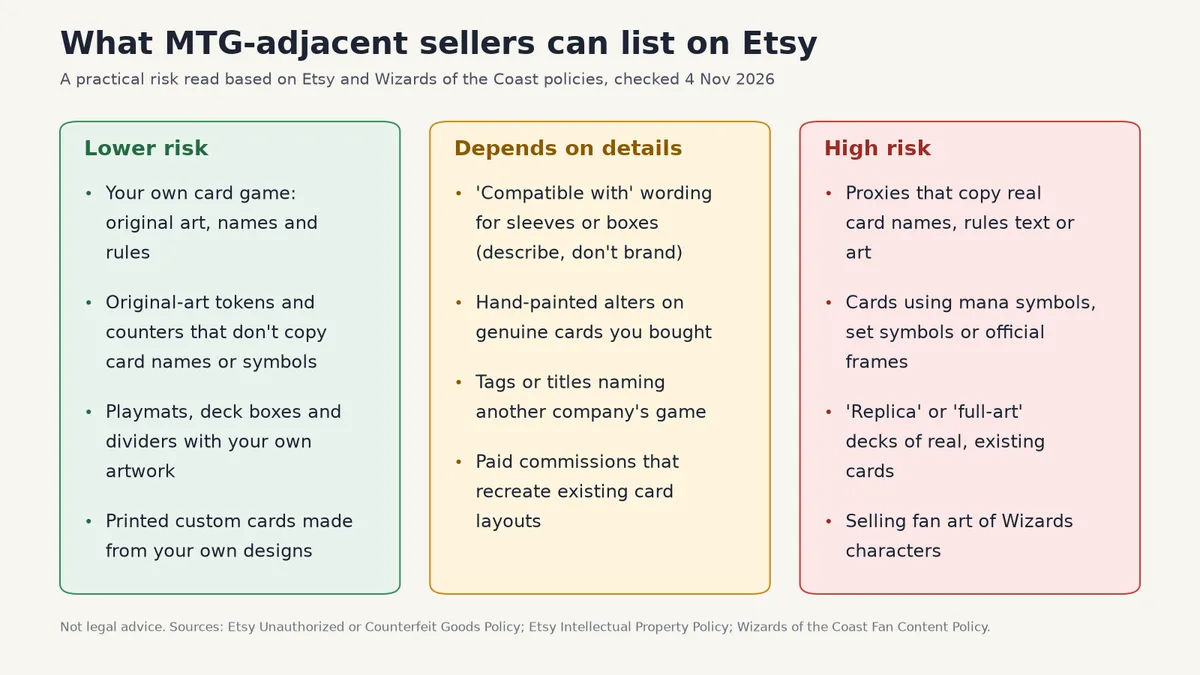
Original card games, original-art tokens, playmats, deck boxes, dividers and booster-pack drops of your own cards are all lower-risk, as long as you don’t copy Magic’s names, symbols or card design.
Sources
- Etsy, Unauthorized or Counterfeit Goods Policy: https://www.etsy.com/legal/policy/unauthorized-or-counterfeit-goods-policy/1500218520260
- Etsy, Intellectual Property Policy: https://www.etsy.com/legal/ip/
- Etsy, Creativity Standards: https://www.etsy.com/legal/creativity/
- Wizards of the Coast, Fan Content Policy: https://company.wizards.com/en/legal/fancontentpolicy
- Wizards of the Coast, Proxies policy and communication (2016): https://magic.wizards.com/en/news/announcements/proxies-policy-and-communication-2016-01-14
- ICv2, WotC clarifies proxy position: https://icv2.com/articles/news/view/33489/wotc-clarifies-proxy-position-magic
- AetherHub, WOTC sending cease and desist letters to proxy websites: https://aetherhub.com/Article/WOTC-Sending-Cease–Desist-Letters-To-Proxy-Websites
- Card Conjurer, About: https://www.cardconjurer.com/about